Export your data, drop in the CSVs. Real open rates, ghost subscribers, growth sources that actually convert.
Click the card behind to switch
What writers find
Substack counts email scanner traffic as real opens. StackStats filters them out so you see your actual open rate.
Substack doesn’t rank subscribers. StackStats scores every reader by opens, clicks, comments, and shares — so you know who they are.
Not generic advice — computed from your own post history, with sample-size warnings so you’re not guessing from one data point.
All computed locally. All actionable.
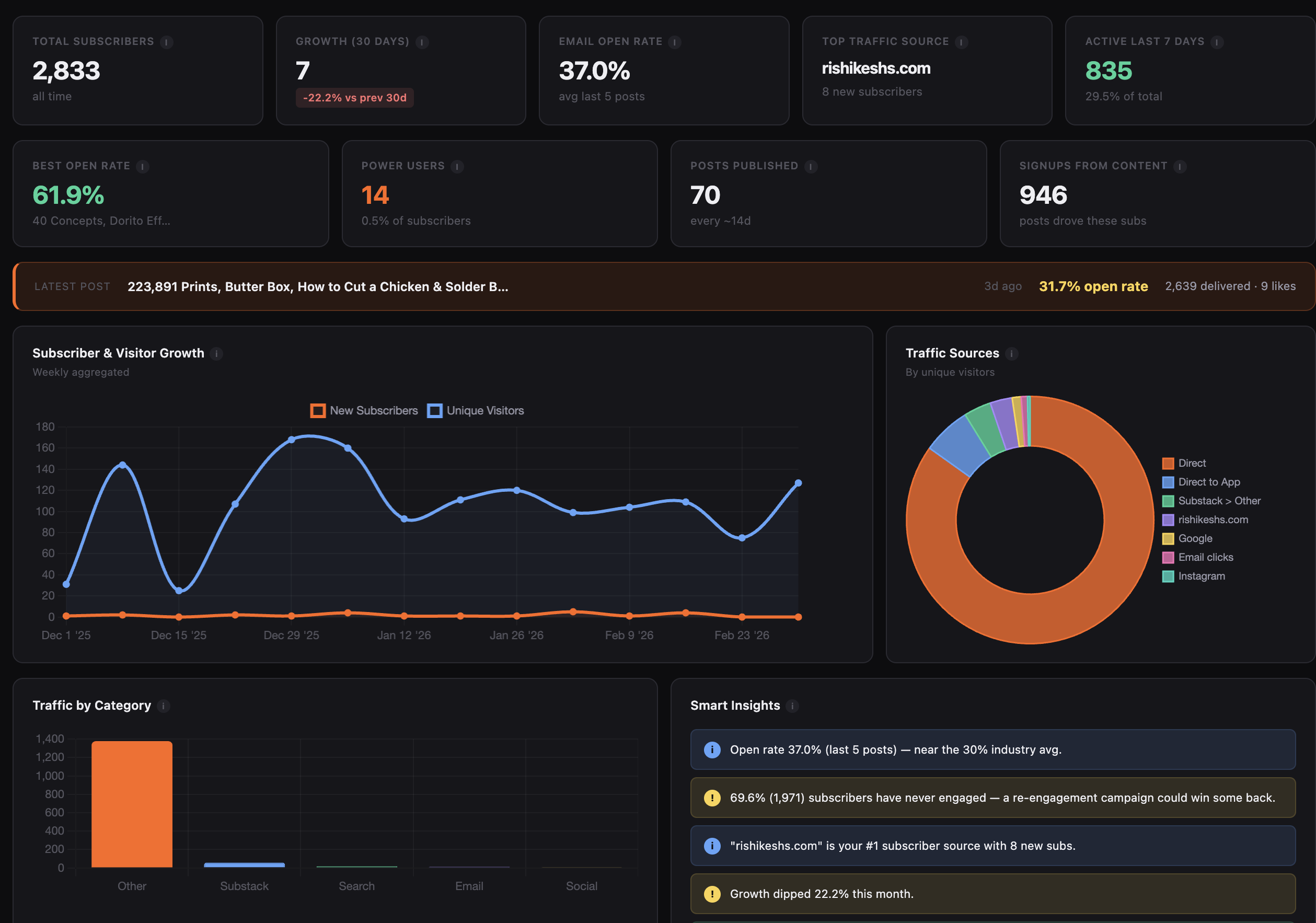
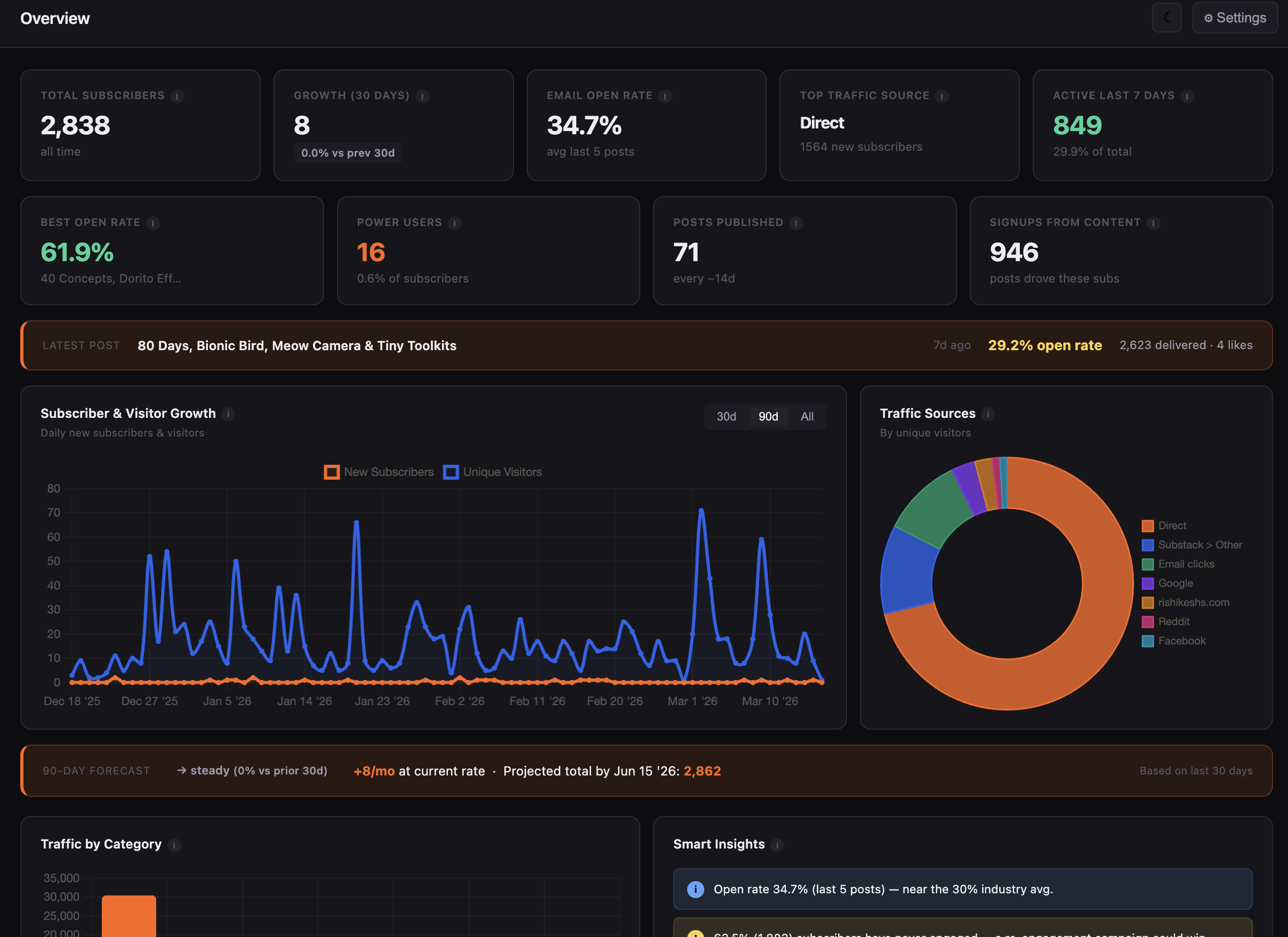
KPIs, 30-day growth, 90-day forecast, latest post performance — all at a glance.
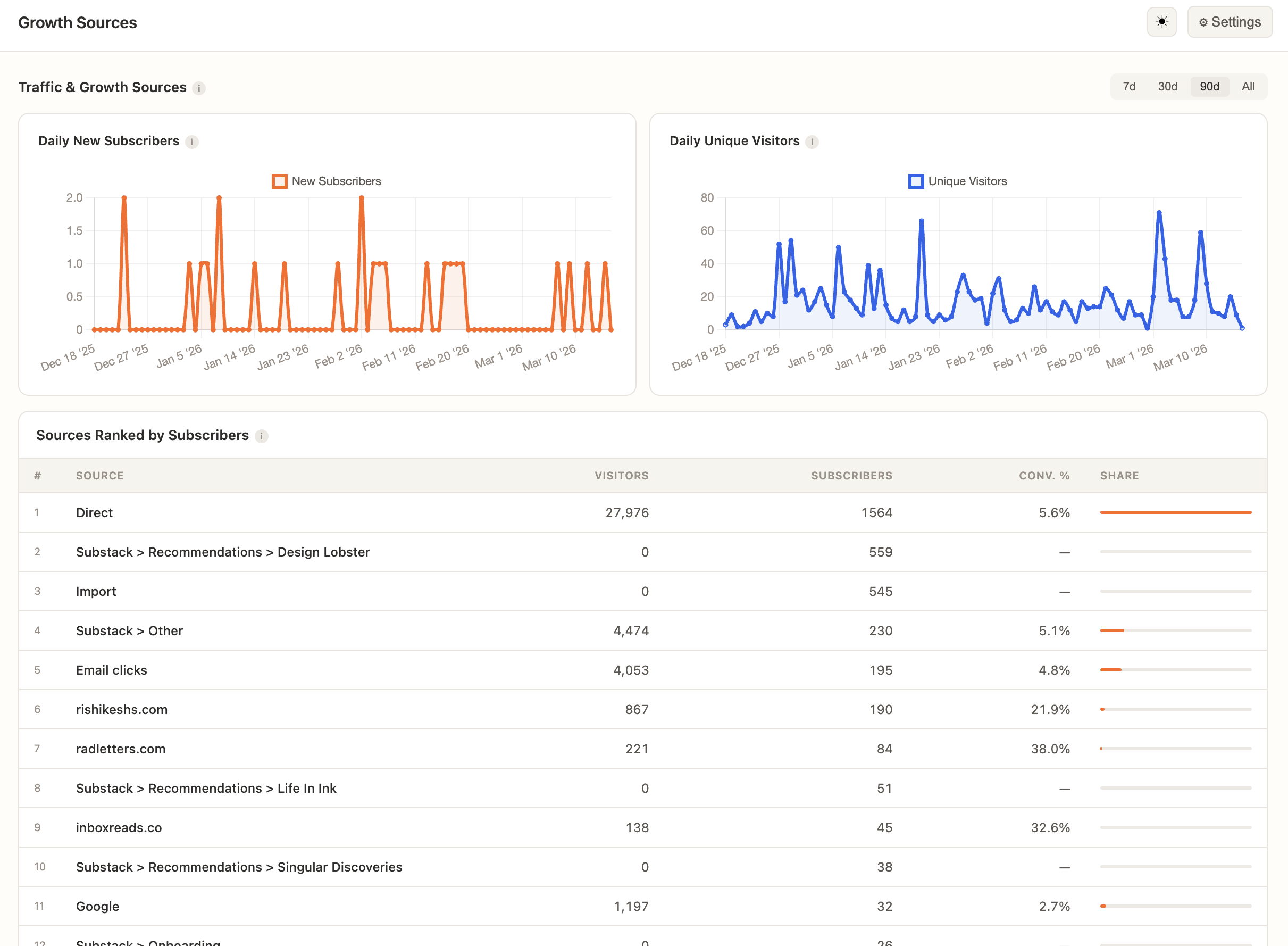
Which sources actually convert — and which posts drove real subscribers.
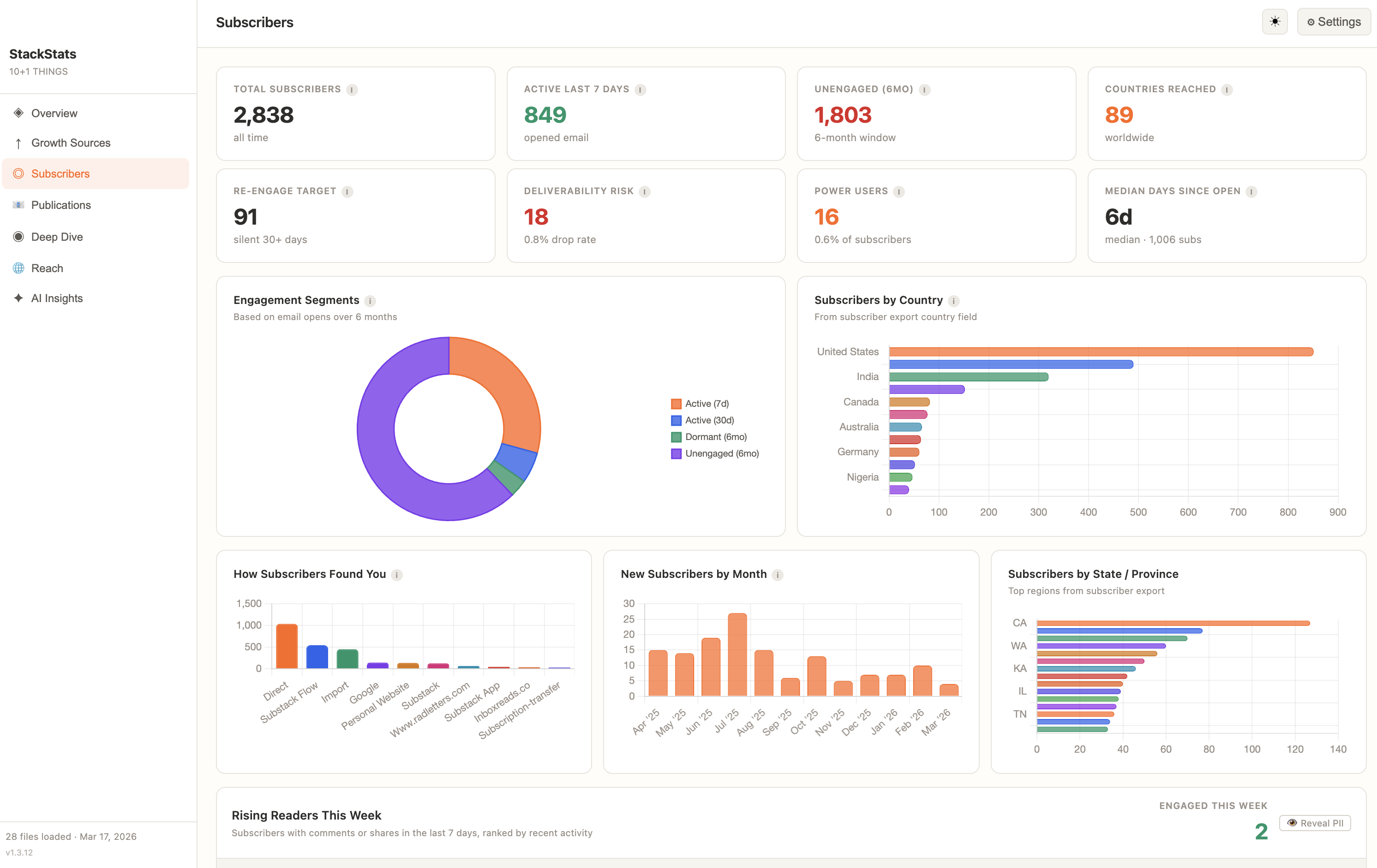
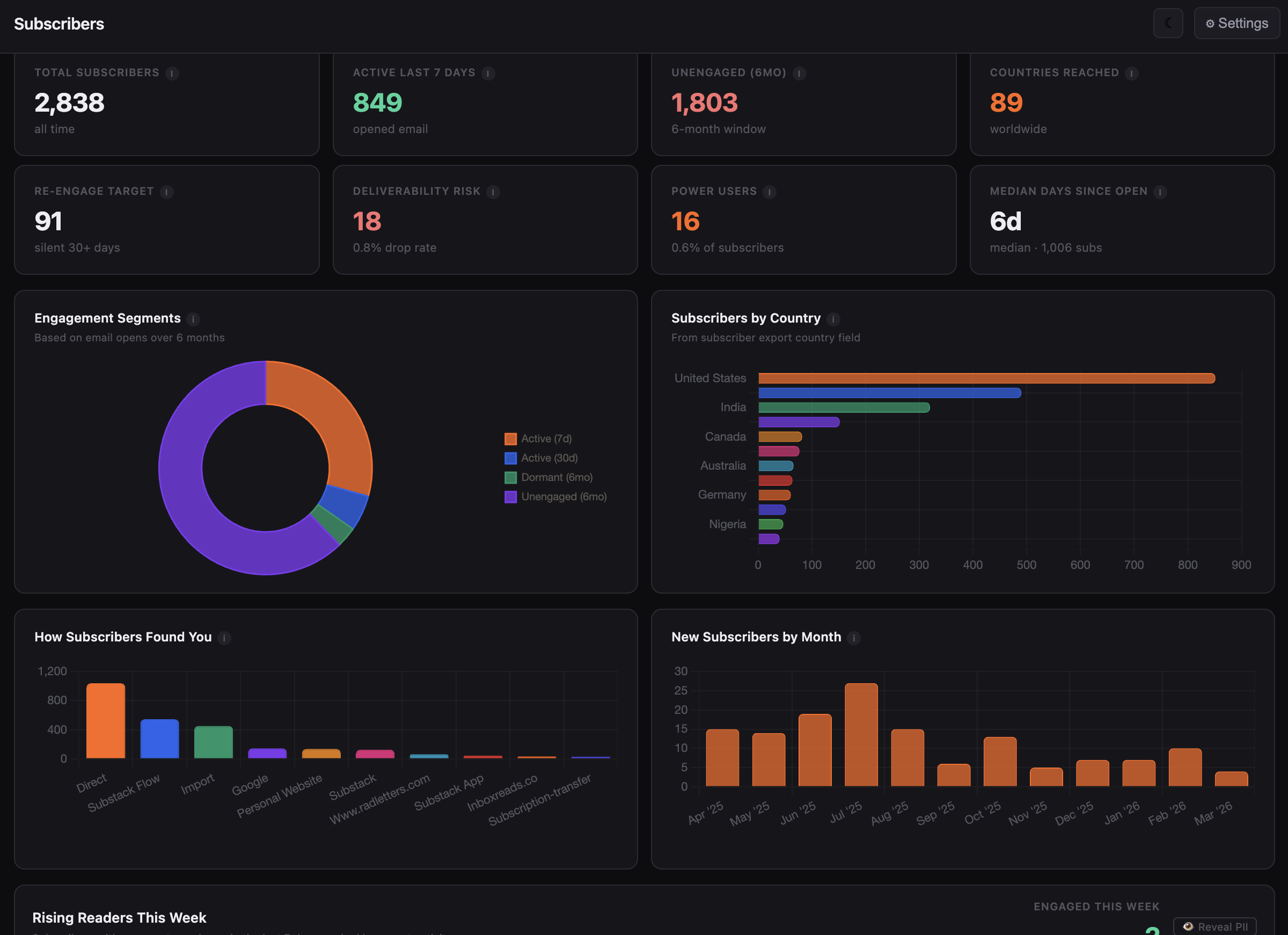
Engagement segments, re-engage targets, power users, deliverability risk.
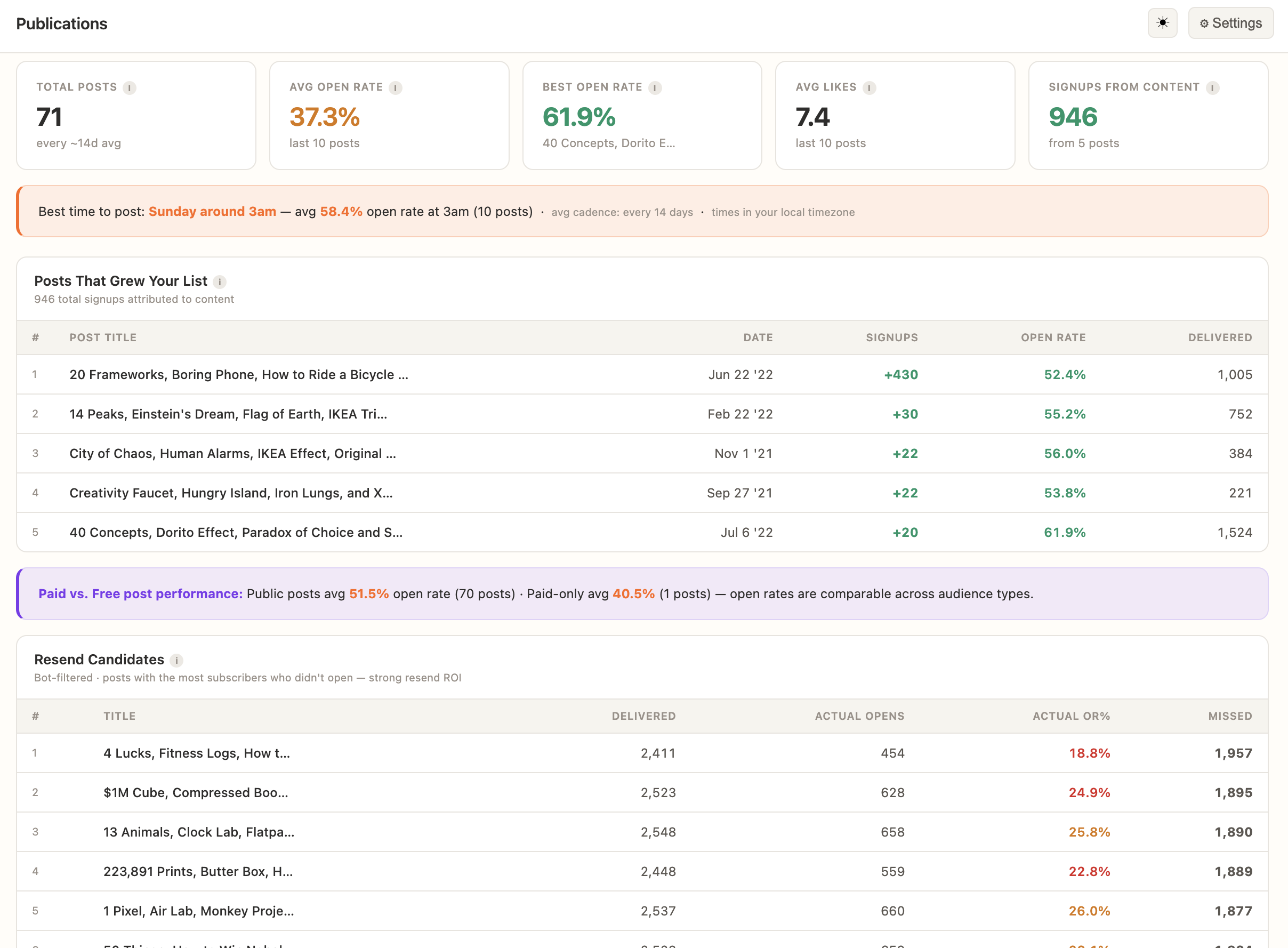
Best day and hour to post, top growth posts, resend candidates.
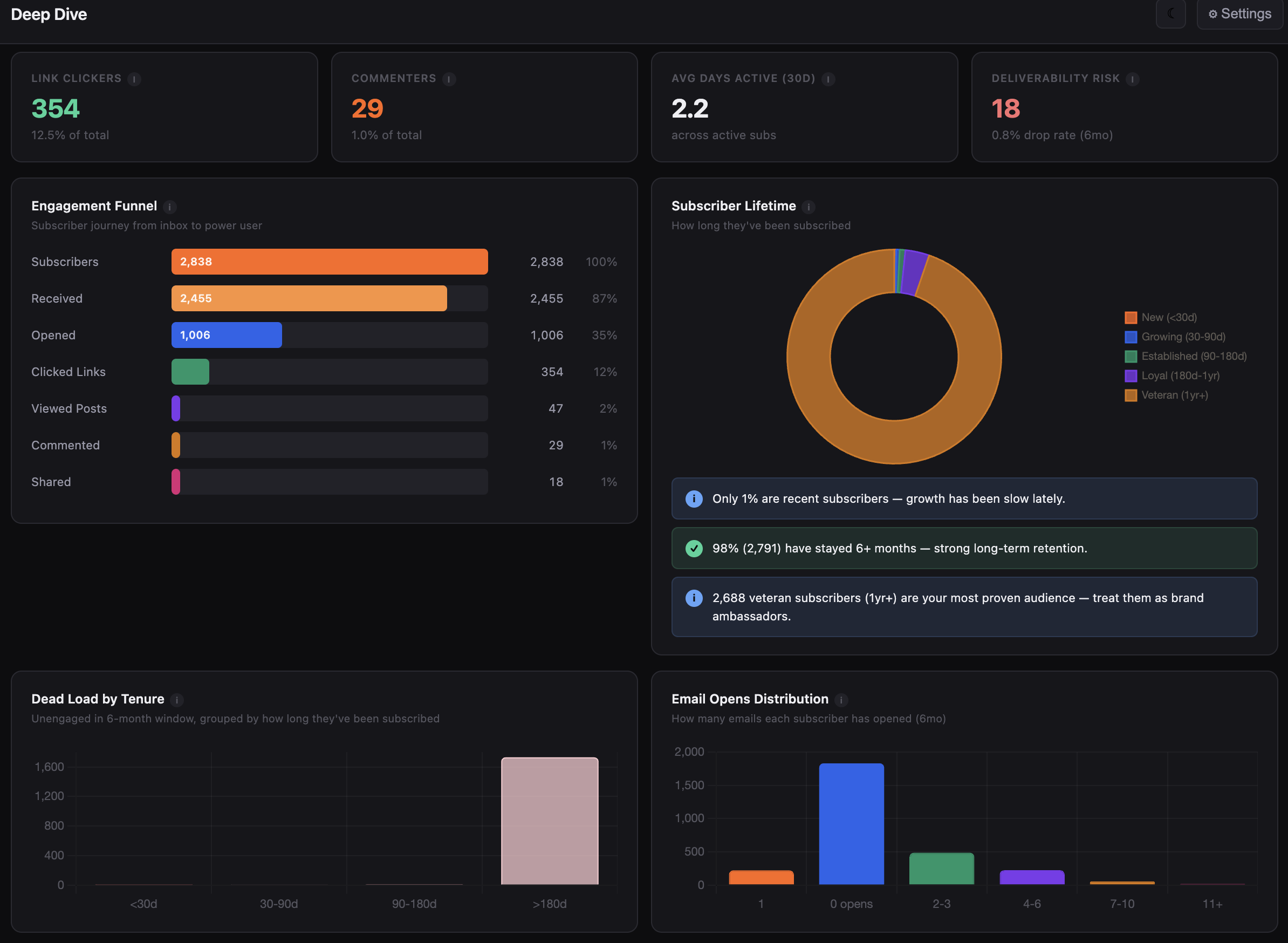
Cohort retention, open rate decay, engagement funnel, top readers scored 0–100.
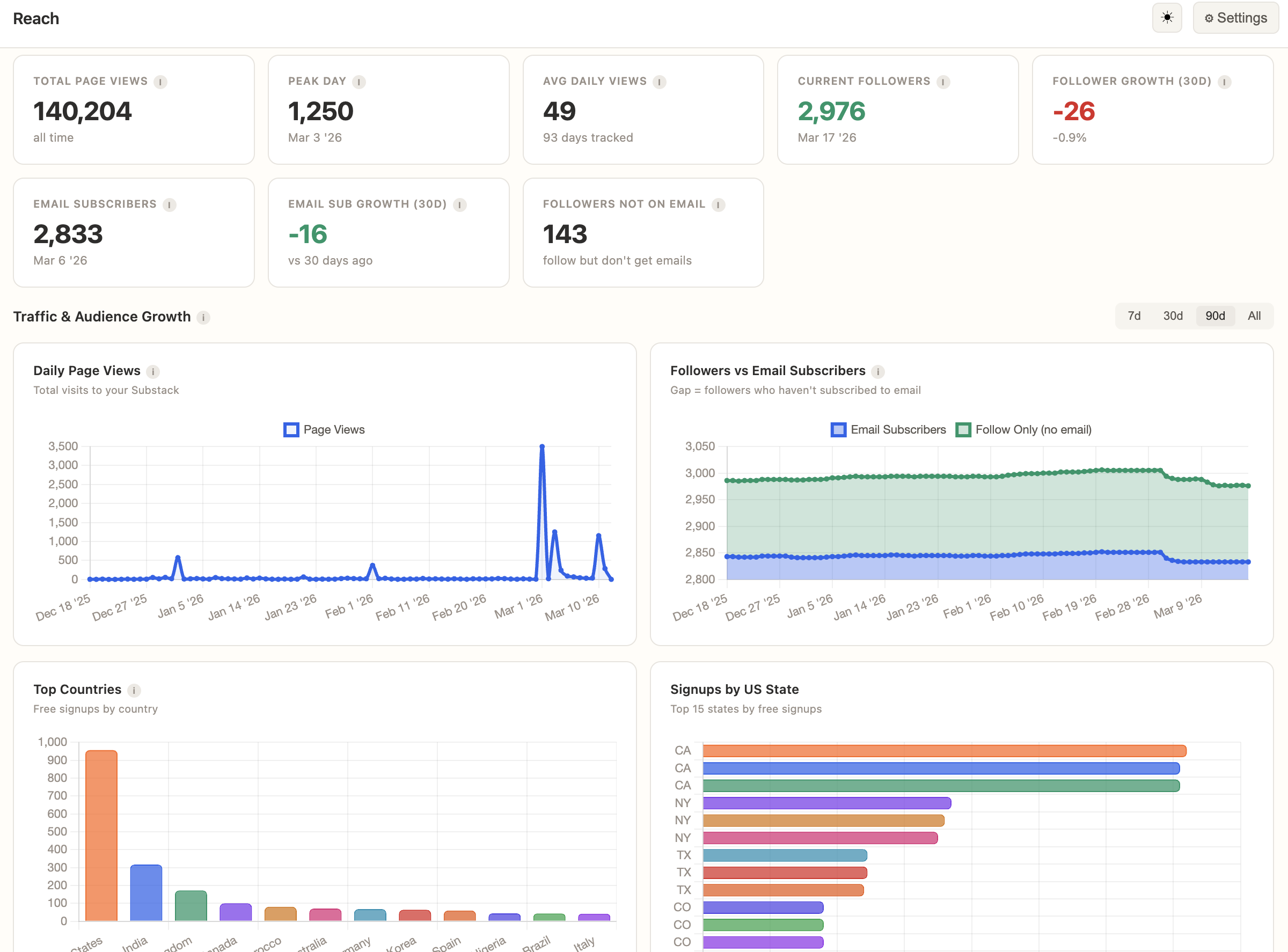
Page views, follower vs. email growth, audience by country and US state.
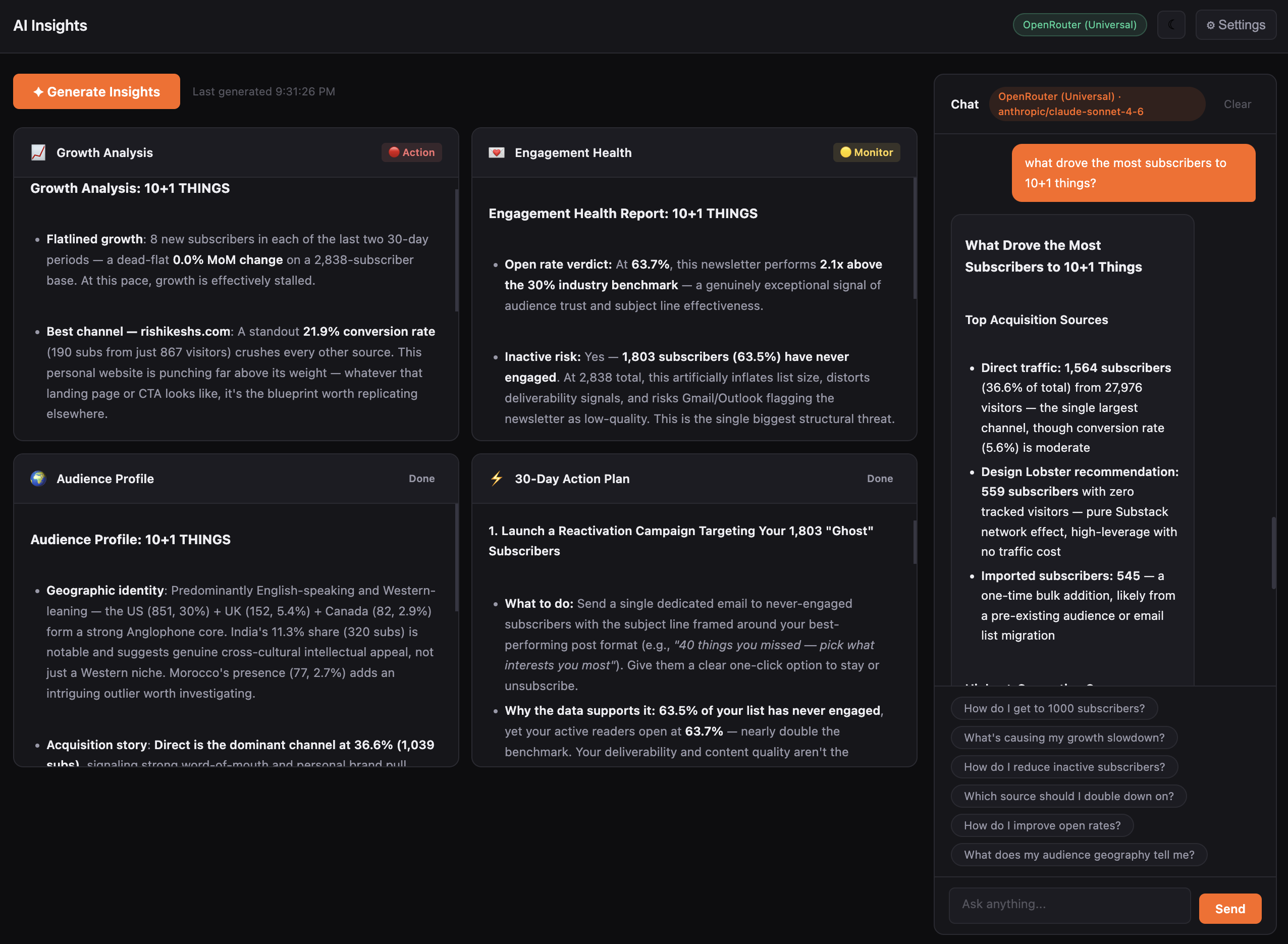
Growth analysis, 30-day action plan, and a chat window that knows your data.
All analytics work without AI. But if you want a 30-day action plan, growth strategy, or a chat window you can ask “why did my open rate drop last month?” — it’s one setting away.
Download your data and save to any folder.
The app auto-detects every file type instantly.
Everything populates. Start exploring.
I write 10+1 Things, a weekly curated links newsletter on Substack with around 3,000 subscribers. I built StackStats because Substack’s dashboard couldn’t answer the questions I actually had. Who stopped reading. Which posts brought real subscribers. How many of my opens were just email scanners.
I use it every week to see how my readers are engaged. It’s the tool I wanted and couldn’t find, so I made it.
No subscription. No account. No recurring charges.
Buy it today — it’ll be a better product next month.
View full changelog →